
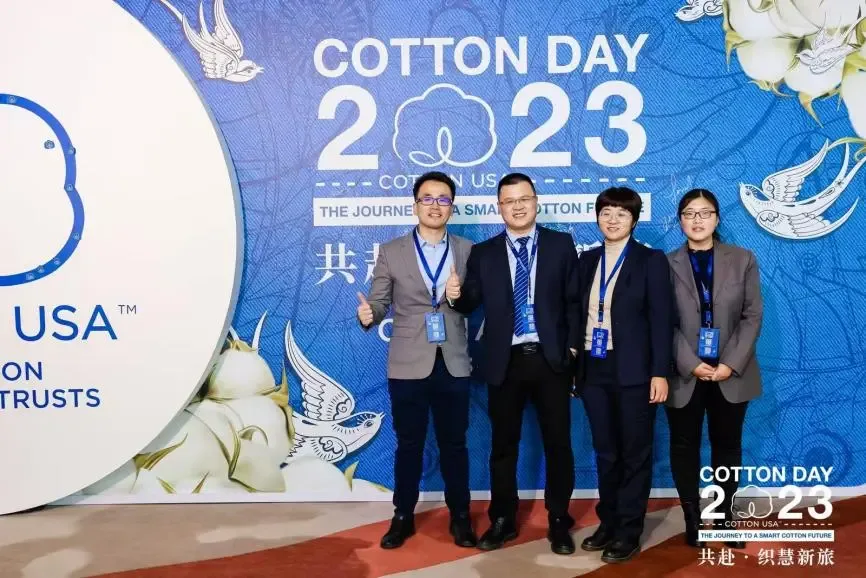
Taking a fabric from an idea to a delivered product is not simply a matter of lining up a series of processes. Color, hand feel, texture, specifications and end use all have to be confirmed again and again as the work moves forward. For a textile company, details live as much on the workshop floor as in a sample record, a handover note or a round of inspection feedback. Liu Fuqian, General Manager of Qingdao Jerid Textile Co., Ltd., oversees sales, human resources, finance and the company's overall operations, while also paying close attention to how fabric design and development connect with the production chain. What matters to him is not listing the steps but making sure every piece of information is accurately understood and promptly acted on before it reaches the next process.

Clear Sample Information Is the Starting Point for Production
Fabric development often begins with a sample, but a sample is never just an isolated piece of cloth. It carries the conversation about appearance, style, end use and the direction of downstream processing. In Liu Fuqian's view, aligning information before production should come down to specifics that every stage can understand: which characteristics must be preserved, which effects need close observation, and which changes to watch for at process handovers. Only when the basics are clearly set out can design and development, production planning and quality priorities move in the same direction.
When designing and developing fabrics for customers and apparel brands, early conversations also turn fairly abstract impressions into items that can be followed up later. Some people focus on the fabric's visual depth, others on how well it suits garment manufacturing, and still others on whether the look stays consistent from batch to batch. With priorities that differ in this way, a company first has to identify what matters most, then pass that information on to weaving, pretreatment, dyeing, finishing and printing. Management does not make judgments on behalf of specialists; it makes sure the right information arrives early enough that every role knows what to watch for.
Once a sample is approved, the associated information still has to travel with the product. Whether one process has left the right conditions for the next, and whether the color, fabric surface and hand feel originally agreed on are still being watched, all need to be reconfirmed as production continues.
Between Workshops, the Handover Is What Matters Most
Starting in the weaving workshop, a fabric goes through pretreatment, dyeing, finishing, printing and other processes. Each stage has its own priorities and each shapes the judgments made at the next. Treating production as a relay rather than a series of separate stops means that a handover passes on not only the physical goods but also the information about their condition. Inspecting greige fabric after weaving is one such observation point in the chain; when something needs attention, the information should go back to the relevant stage immediately, rather than surfacing only when the product is nearly finished.
In his day-to-day coordination, Liu Fuqian pays attention to this habit of 'looking one step ahead and one step back.' Pretreatment needs to understand the actual condition of the greige fabric, dyeing has to balance what came before with the target result, and finishing and printing require their own priorities according to the product. Handing fabric from one workshop to the next is not the end of the job: the handover is where process conditions, quality priorities and the next step of cooperation are confirmed. None of this depends on grand slogans. It shows up in whether information is complete, feedback is clear and issues are dealt with in time.
Changes on the production floor can be subtle. Management cannot cover every situation with a fixed formula; it has to keep the necessary conversations going. Only when information from sales, R&D and the workshops can be checked against one another in good time does it provide a reliable basis for what comes next.
Laboratory and Final Inspection Bring Feedback Back into the Chain
After all its processing, a piece of cloth still has to be examined in the laboratory and at final inspection. A constant-temperature, constant-humidity lab and equipment for measuring color difference and color matching provide the conditions for comparing and judging the fabric's state, while the final inspection workshop gives the product one more careful look before packaging. The point is not only to produce a result, but to make that result the starting point for the next conversation.
If laboratory observation or final inspection raises something that needs further confirmation, the information should be traced back through the earlier stages: is it a gap in the sample discussions, a point that needs rechecking at a process handover, or a detail to watch in packaging and storage? Liu Fuqian cares about closing the feedback loop and does not treat inspection as an isolated step at the end of production. The value of an inspection finding lies in prompting design, production and delivery to go back to the original information and identify a clearer way forward.
This also gives every role a more concrete idea of what 'detail' means: checking the fabric surface, how color presents itself, color coordination and the finished appearance. The laboratory gives final inspection a way of looking; managers make sure the information is seen and passed on.
From Packing to Shipment, Delivery Still Depends on Connected Information
After final inspection, packing, warehousing and shipping need the same care. A fabric entering the warehouse does not leave the earlier information behind: storage, dispatch and handover still depend on clear labeling and consistent records. For fabric awaiting delivery, there is more to it than the outer packaging — product condition, movement records and open communication items come with it. Only when these are properly connected can the work put into design, development and production reach the end use in full.
Liu Fuqian sees warehousing and delivery as part of the same chain. When coordinating sales, he looks at how requirement information enters the company; when coordinating production and related management work, he also watches whether information about finished goods stays clear through packing, storage and shipment.
In the fabric business, care ultimately shows up in products you can see and touch. What supports that result, however, is often a set of unglamorous routines: one more confirmation when discussing a sample, one more explanation at a process handover, a prompt review after laboratory and final inspection, and continuous information through storage and shipping. Connecting these everyday actions is exactly what Liu Fuqian focuses on. There is no shortcut detached from reality — only patience at every stage, making the path from sample to inspection clearer and more solid.
Reporter: Tan Shuya