
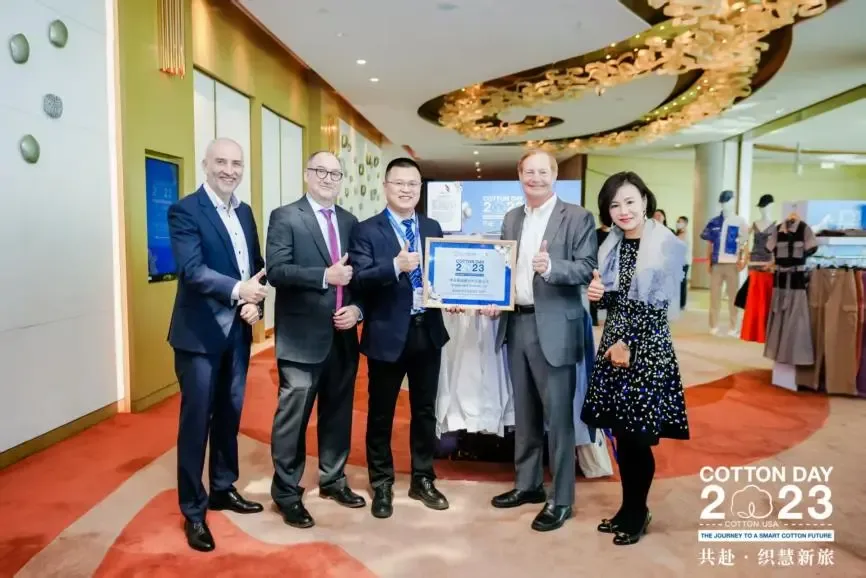
When a fabric requirement first comes up in discussion, it is rarely a complete technical specification. Customers talk about the hand feel, drape and color impression they want the garment to have, and they also care about where it will be worn, the delivery schedule and how it feels in use. Turning scattered requirements into language that both R&D and production can work with is a crucial step for a fabric company. For Liu Fuqian, the job often starts with making sense of the requirement itself.
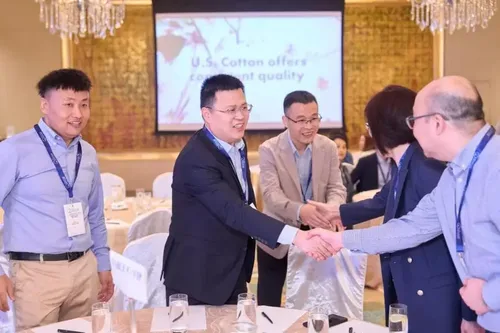
As General Manager of Qingdao Jerid Textile Co., Ltd., he oversees sales, human resources, finance and overall operations, while also taking part in designing and developing fabrics for customers and apparel brands. In his view, the information sales brings back cannot stop at 'what the customer likes.' Different garment categories, seasons, pattern cuts and downstream processing methods all affect where work on a fabric should begin. A manager has to break the requirement apart first and identify which parts are preferences about appearance, which relate to performance, and which have to do with production flow and resource planning.
This kind of translation is not a simple swap of marketing language for technical terms. Impressions such as lightweight, crisp, fine or easy-care can point to yarn selection, fabric structure, dyeing and finishing behavior, and finishing direction. Liu Fuqian discusses sales feedback with the R&D team and judges viable development routes against the company's existing fabric base. Where a requirement is still vague, he first sets out directions that can be compared, then uses samples to turn abstract impressions into something physical — so the information is not oversimplified as it passes from hand to hand.
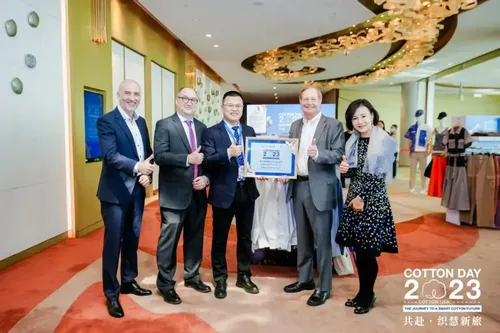
A sample is a key point in the conversation. It is neither the end of development nor an isolated object for a sales presentation. When Liu Fuqian looks at a sample, he checks both whether the color, texture and hand feel come close to the original requirement and whether it can move smoothly into the following stages. How the fabric will behave in a finished garment, whether printing, bonding or functional finishing will suit it, and what handover issues may arise in bulk production should all be brought to light as far as possible at the sample stage. The judgment is not about reaching a final verdict in one go; it is about giving the next discussion something tangible to compare.
The company handles the import and export of textile fabrics, fabric production and sales, and design and development. Its range covers lightweight and heavyweight woven fabrics, bleached or dyed, as well as printed, yarn-dyed and bonded fabrics. With a portfolio this broad, judging requirements cannot rely on a single kind of experience. For developments heading in different directions, Liu Fuqian prefers to work backwards from end use: first establish what the fabric needs to express in the garment and what the wearer needs, then discuss the appropriate texture, color and finishing solution.
The rhythm of the production floor also shapes business decisions. From weaving through pretreatment, dyeing, finishing and printing, then on to the laboratory, final inspection and warehousing, a fabric passes through a continuous chain. A direction agreed by sales can only move forward smoothly if it is broken down into tasks that connect across those stages. In coordinating the business, Liu Fuqian looks not just at whether a given step is complete, but at whether information is consistent before and after it, whether sample feedback gets back to the relevant teams in time, and whether materials and scheduling work together. For a manager, communication is not about sending out tasks; it is about keeping the basis for judgment intact as information moves.
Choosing a functional finish calls for particular care. Easy-care, soil-release, moisture-absorbing and quick-drying, antibacterial and odor-resistant, fluorine-free water-repellent and similar options usually come from expectations tied to particular use scenarios. Liu Fuqian puts such requirements back into the context of the fabric itself: does the base character of the product suit the finish, will the hand feel and appearance stay coherent after treatment, do production arrangements allow for it, and does the customer's understanding of the effect match the development goal? Only by discussing these questions together can a functional finish become part of what the product expresses, rather than a buzzword detached from the fabric.
On the relationship between sales and R&D, he stresses that information should flow both ways. Salespeople need to bring market feedback into development discussions and understand the conditions and limits under which a sample was made; R&D staff need to identify what the customer really cares about in the product details and explain the options clearly. That way, sales conversations are about more than passing on requirements and development is about more than making something. Checking the same sample repeatedly from both sides reduces the gaps caused by different interpretations and brings the next round of decisions closer to actual needs.
The same coordination extends to management areas such as human resources and finance. Development plans require staffing, moving samples forward requires sensible process links, and production preparation has to account for the timing of purchasing, warehousing and cash use. In his overall planning, Liu Fuqian weighs the concerns of different departments within a single business judgment: respond to customer needs while respecting how production actually works; leave room to explore new directions while keeping day-to-day operations stable. Fabric development thus stops being a task for the technical team alone and becomes a process shared by sales, R&D and operations.
When the market shifts, he does not treat every new request as a signal that must be followed immediately. The customer's description has to be understood, and the company's own limits have to be seen clearly. Which requirements sit close to the current product direction, which need more validation, and which stages deserve communication and sampling effort first all determine how resources are allocated. Making these trade-offs is a standing task for anyone running a business. It tests both sensitivity to market information and a grasp of the conditions for internal collaboration.
In the fabric industry, a piece of cloth travels from idea to finished product through many discussions that outsiders rarely see. Slight shifts in color, choices about texture, the direction of finishing and adjustments after sample feedback can all affect the final result. What Liu Fuqian does is place the customer's language, product judgment and shop-floor conditions in one working chain, so that departments collaborate around clearly defined questions. There is no shortcut here that floats free of reality — just patient work on information and a clear understanding of who is responsible at each stage.
From a customer stating a requirement, through R&D discussing directions, to the production floor sequencing the steps, a fabric takes shape through a series of concrete judgments. Liu Fuqian's oversight of the whole business shows in these details too: helping sales see the conditions under which R&D and production operate, helping R&D understand what the market expects of the product, and aligning resources around a reasonably clear goal. For a fabric company, the ability to turn requirements into action and conversation into coordination is what keeps everyday operations moving in good order.
(Reporter: Zeng Shuyi)